

Demand for effective water management has significantly increased over the last few years as the shortage of water all over the world is becoming a serious problem. The conventional methods of monitoring the water system have generally been inefficient and costly; thus, there is a necessity for revolutionary solutions. A leading-edge technology is the use of Artificial Intelligence (AI) with smart water meters. These AI-driven meters not only offer the consumption data in real-time but also make use of edge intelligence to detect leaks, optimize water supply, and enable system performance to be elevated. The present article elaborates on how AI-based smart water meters become the main factor in the transition of water management, which is mostly concentrated on leak detection and supply optimization.
The Role of Smart Water Meters in Modern Water Management
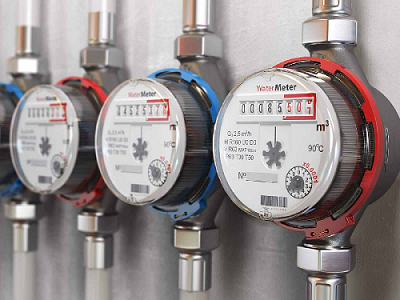
A smart water meter is an electronic gadget that keeps track of water consumption in real time and sends the information to both the utility providers and the consumers. As opposed to traditional meters that simply register usage at certain intervals, these meters are able to deliver continuous usage data in real time; therefore, they depict the latest consumption which assists the consumers in making the correct decisions. The main reason for putting in smart meters is the development of technologies like IoT, AI, and machine learning. These devices perform data processing locally at the edge; thus, they are able to respond very quickly to situations like leaks or abnormal consumption patterns because the time taken for the operation is very short.
Leak Detection: A Major Application of AI in Smart Water Meters
Leak detection is one of the most difficult problems to solve in water management. In numerous urban systems, the water lost from leaks accounts for up to 30% of the total water supply. These leaks are hardly ever found, which means that they can last for a long time, thus leading to increased operational costs and the unnecessary dissipation of resources. Manual inspections are a common practice in traditional leak detection methods and thus are a disadvantage.
An AI-enabled smart water meter is a more viable option. Armed with machine learning algorithms, these meters can pinpoint abnormal water flow patterns such as pressure changes, spikes, or irregular consumption. This is what allows utilities to pinpoint leaks along with their extent in a very short time. Having edge intelligence means going a step further in this leak detection by having the device be able to make the first call on its own. The meter, for instance, can notify the utility of the occurrence of an abnormal flow or, if it has the capability, it can even close the valve to stop the leak.
Optimizing Water Supply with AI
Water shortages in regions with complex distribution networks can be solved through smart water meters equipped with AI technology. AI by itself can manage the utilities supply and demand through the creation of predictive models by analyzing the real-time data. An AI algorithm can even predict consumption patterns by taking into account the historical data and weather conditions, thus the utilities can be enabled to distribute water in the areas where it is most needed. On the other hand, it can also detect areas which are under-supplied or over-supplied thus enabling the efficient use of resources to be increased through targeted interventions. Moreover, AI is a great help in water waste reduction through the identification of off-peak usage so that utilities may adjust prices or offer incentives for the change of consumption, thus ensuring the optimization of resource allocation.
Benefits of AI-Enabled Smart Water Meters:
The benefits arising from the use of AI in smart water meters are very crucial to both utility companies and consumers in the following ways:
- Real-time Monitoring and Data Analysis: AI systems keep an eye on water consumption all the time, hence, they can very quickly locate an anomaly or a leak even if they have not been escalated.
- Cost Savings: Utilities can lower their costs of lost water and inefficiency through leak detection and optimized water supply. Consumers get their meters accurately and fairly and in addition to this, if there is water charging in a household, it will be reduced as water management practices become more efficient.
- Environmental Impact: Smart water meters offer the absolute necessity of real-time feedback that is used for consumption reduction, which makes water-saving activities feasible and therefore, they make quite a big contribution to water conservation in water-scarce regions.
- Enhanced Customer Experience: AI integration in a utility company allows such a company to extend its services to the customers. In the case of unusual water usage, the alert system can inform the user, allowing for a quick response and preventing unexpected charges on the bills.
- Proactive Maintenance: Through the use of AI, real-time data can be analyzed to help in predictive maintenance, thus utilities will be able to carry out their maintenance only when necessary, hence they will be more efficient and the life of their infrastructure will be prolonged.
The Growth of the Smart Water Meter Market
The smart water meter market has expanded substantially due to the essential need for water conservation and better infrastructure. Approximately 2 billion people worldwide live in areas that experience severe water stress, making the deployment of AI-driven smart meters a must for efficient water management. Therefore, smart meters with AI capabilities contribute to saving water, reducing expenses and making the distribution more efficient. The demand for such meters with AI capabilities will be very high in areas suffering from water shortage or where the infrastructure is old and deteriorated. Investments in these instruments will probably increase as cities and the private sector take the decision of their benefits, thus leading to further innovations in the sector.
Challenges and Future Prospects
The introduction of AI-powered smart water meters helps to gain some benefits, but they still have challenges such as data privacy and security risks, and costly installation and integration. AI systems need to be regularly updated and maintained to ensure their accuracy. Nevertheless, the use of AI in water management will still be the technology of tomorrow. Advancements in technology will lead to AI models becoming more accurate in their predictions and capable of automating more tasks. The use of AI with other smart city technologies like smart grids and IoT devices will be a great move towards saving resources.
According to Pristine Market Insights, smart water meters powered by AI represent a major step forward in the goal of less wasteful and more environmentally friendly water management. The use of AI and edge intelligence in these tools allows them to find leaks instantly, help the water supply run smoothly and give both the utilities and the consumers the freedom to decide wisely. With the expansion of the smart water meter market, the function of AI in the change of water systems will be very important in solving the global water crisis and determining how water will be managed in the coming years.