

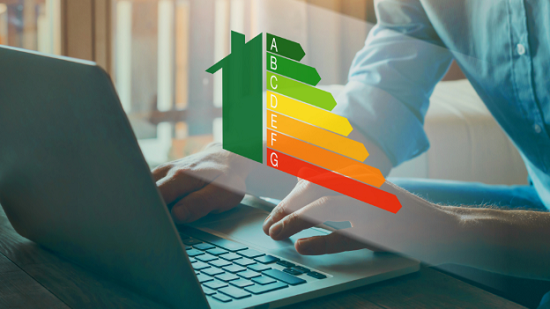
The International Energy Agency’s new Energy Efficiency 2025 report says the world is veering off its pledge to double efficiency gains by 2030. Instead of the roughly 4% improvement needed each year, progress since 2019 has averaged only 1.3%. The authors of the paper identify the built sector as one of the main reasons for the slowdown.
The IEA outlines three main areas for improvement – stronger building codes, retrofit investments, and digital optimisation – but energy-efficiency experts say these measures must be paired with operational fixes to deliver impact now, not in a decade.
Authors of the report state that by mid-2025, there were 95 mandatory codes for residential buildings and 97 for non-residential ones, which, taken together, cover only 60% of new buildings worldwide.
Energy experts from Exergio, a firm that develops AI-based tools for energy efficiency in commercial buildings, argue that even where codes exist, they rarely change how building energy systems operate day to day.
“Building energy codes say a lot about how efficiently a building should be designed, but almost nothing about how energy management systems inside those buildings should run. They don’t explain how to adjust to weather, occupancy, or actual loads hour by hour. Without that smarter operation, the gap between promised and real emissions will keep widening – even in brand-new buildings built with energy-efficient materials and modern energy-saving equipment,” said Donatas Karčiauskas, CEO of Exergio.
The IEA also stresses that cutting energy demand now depends on retrofitting existing buildings.
According to the paper, in China, the US, and the EU, spending on building retrofits was more than 20% higher than in 2019, at roughly $120 billion in 2024. Worldwide, investment in end-use efficiency is expected to approach $800 billion in 2025 – about 6% more than in 2024 and over 70% above 2015.
The IEA notes that more than 90% of spending on these building-efficiency upgrades already comes from households and private investors, with only a small share covered by public funds.
Similarly, the European Commission aims to expand the EU market for energy service companies – firms that deliver performance-based energy-efficiency projects – to around $4-6.5 billion a year.
Exergio agrees that deep retrofits are essential but also points out that a renovated building can still waste almost as much energy as before if its energy systems are run poorly.
“A building can spend millions on insulation and new heat pumps and still waste energy if heating and cooling run at the same time, or if entire floors stay conditioned long after people go home. In practice, we see 20-30% of potential retrofit savings disappear because systems aren’t adjusted to real-time needs – not because the hardware is bad,” added Karčiauskas.
The IEA’s third major finding is that digital optimisation is now a core pillar of building efficiency.
It can deliver up to 40% energy savings without replacing equipment, making it one of the fastest ways to reduce energy use in commercial buildings.
Several countries now require advanced automation and control systems in commercial buildings, including the EU-wide automation requirements set out in the Energy Performance of Buildings Directive, as well as new mandates in France, Germany, Singapore, Australia, and India.
For Karčiauskas, this is overdue recognition of where the quickest wins really sit. He also points out that the IEA mainly treats AI as an extra source of power demand and does not notice its potential to cut waste in buildings. In his view, AI could become one of the main drivers of digital optimisation in this sector: his team uses AI as the “brain” of their platform.
Exergio‘s AI-driven platform plugs into existing building-management and metering systems, reads live data from sensors, occupancy patterns, and tariffs. It then adjusts HVAC, heat pumps, and other major loads as one system.