

Murata’s High-Voltage MLCCs:
Power electronics is undergoing a profound transformation. Devices are now expected to operate faster, become smaller, and achieve unprecedented levels of efficiency.
To meet these demands, wide-bandgap (WBG) semiconductors, such as silicon carbide (SiC) and gallium nitride (GaN), are increasingly adopted over silicon-based devices. These advanced materials enable significantly higher switching frequencies and increased voltage levels. This reduces system size and boosts power density.
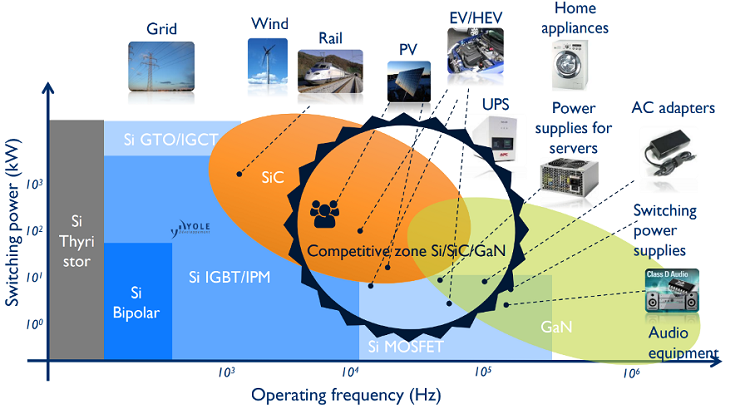
At the same time, the rapid electrification of transport, industry, and energy infrastructure is driving an unprecedented expansion in power conversion applications. This evolution exposes designers to a far wider spectrum of operating conditions.
Critical Challenges in High-Voltage Systems
These evolving expectations place significant stress not only on active devices but also on the passive components integral to these systems. Higher switching speeds, for instance, lead to sharp voltage transients and electromagnetic interference (EMI). Increased voltages impose strict demands on insulation and overall reliability.
Multilayer ceramic capacitors (MLCCs) play a vital role in suppressing high-frequency noise, absorbing transient spikes, and protecting semiconductor devices from overvoltage stress. Therefore, the advancement of MLCCs must align with the increased performance standards required by WBG devices, necessitating enhancements in dielectric compositions and creative packaging approaches.
Taming Transient Spikes
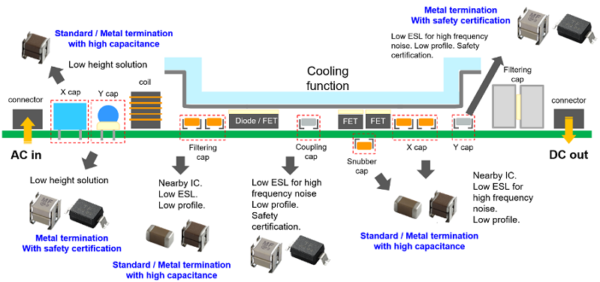
Snubber capacitors are essential in power electronics, especially where high-speed switching induces voltage overshoot and ringing. This is particularly critical during the turn-off transitions of MOSFETs or IGBTs. This issue is heightened in SiC and GaN power semiconductors, which exhibit greater surge voltages compared to traditional silicon IGBTs.
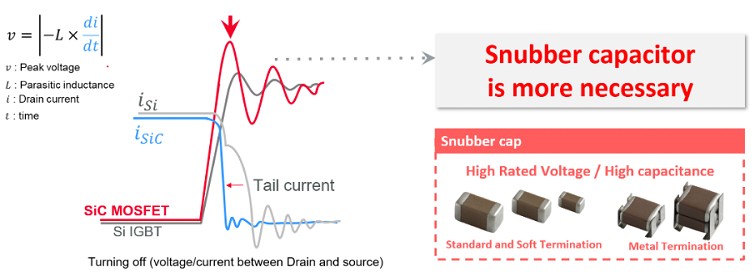
A well-matched snubber capacitor effectively absorbs transient energy, suppresses peak voltages, and damps oscillations. Murata’s metal-termination MLCCs, such as the KC3 and KC9 series, are optimized for use in SiC-based circuits.
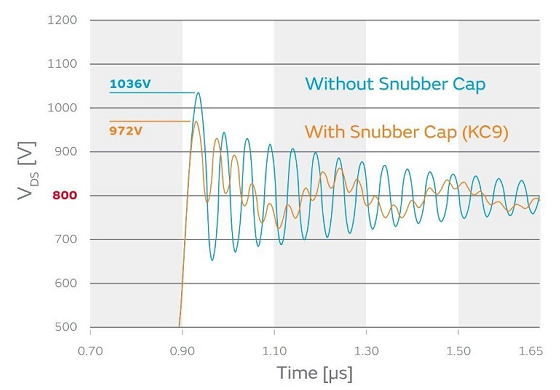
Their compact size, with high capacitance values and rated voltages, allows them to be placed close to switching devices, minimizing inductive path length and enhancing the suppression of voltage spikes. This contributes directly to the reliability and efficiency of the overall power module.
Noise Suppression and Safety
Y capacitors are also vital components in power electronics, especially when WBG devices are used. They address the challenge of high-frequency noise and ensure robust isolation between the primary circuitry and chassis or earth/ground. This capability is critical for applications that must adhere to stringent safety standards, where isolation barrier integrity is paramount to preventing electrical shock hazards.
Murata’s Y-class capacitors, such as the DK1 series, are available in a range of package designs tailored to different applications and safety requirements, such as IEC 60384-14, UL 1414, or CQC. These offerings include traditional through-hole devices, SMD MLCCs, and both inside and outside bending resin-molded SMD variants.
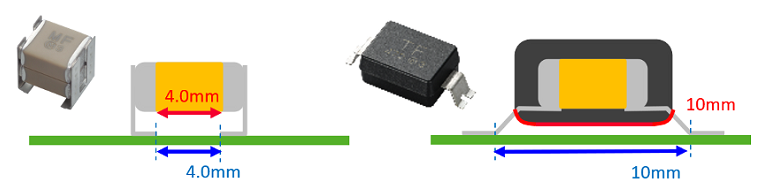
Each capacitor is engineered to deliver low dielectric loss and high insulation resistance. They are certified to meet Y1 or Y2 classifications, with rated voltages reaching up to 1500Vdc. Their low equivalent series resistance (ESR) and equivalent series inductance (ESL) ensure effective suppression of high-frequency noise even in dense power architectures.
Meeting Diverse High-Voltage Needs
Power system requirements differ not only between domains like EVs or PV inverters but also across subsystems within a single application. The type of MLCC selected must be precisely matched to its operating conditions.
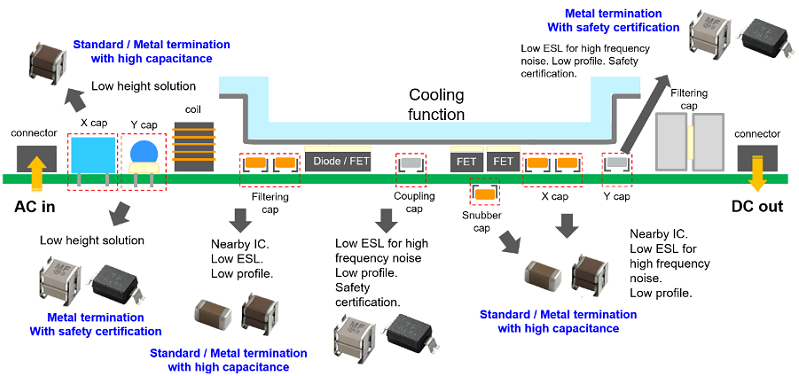
Through careful engineering, spanning dielectric materials, mechanical robustness, and package integration, Murata’s MLCC portfolio delivers consistent, high-voltage performance. They also meet the form factor and safety expectations of today’s advanced designs.
Source: Murata blog