

The global mining industry is experiencing a paradigm shift as worker safety, operational efficiency, and regulatory compliance move to the forefront of corporate strategy. One of the most impactful innovations driving this transformation is fatigue monitoring technology. Designed to detect drowsiness, reduced alertness, and physical exhaustion, fatigue monitoring systems are rapidly becoming essential tools for modern mining operations.
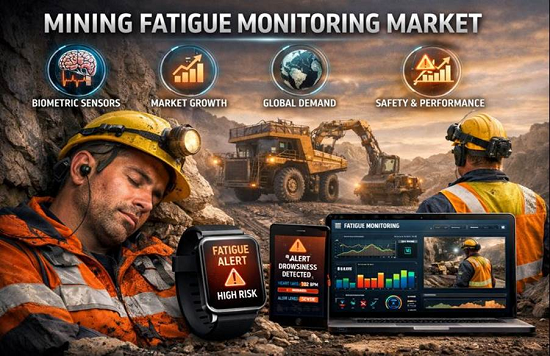
The global mining fatigue monitoring market is projected to grow from US$ 1.6 billion in 2026 to US$ 3.1 billion at a CAGR of 10.2% from 2026 to 2033.
As mines operate around the clock and in increasingly complex environments, managing human performance is no longer optional—it is a strategic necessity. This growing emphasis on safety and productivity is propelling the mining fatigue monitoring market toward accelerated growth.
Why Fatigue Is a High-Risk Factor in Mining
Mining environments are physically demanding and mentally taxing. Long shifts, harsh conditions, and remote locations contribute significantly to worker fatigue. Even minor lapses in concentration can result in accidents involving heavy machinery, haul trucks, and underground operations—often with severe consequences.
Fatigue affects reaction time, decision-making, and situational awareness, making it one of the leading contributors to workplace incidents. As awareness increases, mining operators are prioritizing proactive fatigue management rather than reactive incident response. This shift has created strong demand for technologies capable of continuously monitoring worker alertness in real time.
Technology Reshaping Safety Standards
Advancements in wearable devices, computer vision, and artificial intelligence (AI) are redefining fatigue detection. Modern systems use biometric sensors, facial recognition, and behavioral analytics to assess fatigue indicators such as eye movement, blink rate, heart rate, and posture.
Wearables embedded in helmets or wristbands capture physiological data, while in-vehicle cameras monitor operators of heavy equipment. AI-powered software analyzes this data to identify fatigue patterns and issue immediate alerts when risk thresholds are reached. Supervisors can then intervene by scheduling breaks, rotating shifts, or temporarily reassigning personnel.
This move from subjective observation to objective, data-driven monitoring has greatly improved the accuracy, reliability, and effectiveness of safety programs across mining sites.
Regulation and Compliance Fueling Market Growth
Stricter occupational health and safety regulations worldwide are accelerating adoption of fatigue monitoring systems. Governments and industry regulators increasingly require mining companies to demonstrate proactive fatigue risk management as part of compliance frameworks.
Digital monitoring solutions provide auditable records, real-time reporting, and detailed safety analytics—making them valuable not only for accident prevention but also for meeting regulatory and insurance requirements. As compliance standards continue to tighten, fatigue monitoring is evolving from a competitive advantage into a mandatory operational component.
Productivity Gains through Safer Operations
Beyond safety, fatigue monitoring delivers measurable productivity benefits. Fatigued workers are more prone to errors, equipment mishandling, and slowed response times, all of which can lead to costly downtime and maintenance issues.
By maintaining high alertness levels, mining companies can reduce accidents, improve equipment utilization, and optimize shift scheduling. Data insights from fatigue systems help management identify high-risk time periods, adjust workloads, and design more efficient workforce strategies. The result is a safer, more reliable, and more productive operation.
Regional Expansion and Competitive Innovation
Resource-rich regions with advanced mining infrastructure—such as Australia and North America—are leading in adoption due to strong safety regulations and digital readiness. At the same time, emerging mining economies across Asia-Pacific, Latin America, and Africa are increasingly investing in fatigue monitoring to align with global safety benchmarks.
The competitive landscape is defined by continuous innovation. Technology providers are enhancing AI algorithms, integrating fatigue monitoring with fleet management systems, and offering customizable platforms tailored to specific mining environments. According to insights from Persistence Market Research, the convergence of AI, wearables, and industrial IoT is expected to further accelerate market penetration and technological sophistication.
Conclusion: A Safer, Smarter Future for Mining
The mining fatigue monitoring market is entering a phase of rapid expansion driven by rising safety demands, regulatory pressures, and the need for operational efficiency. What was once considered a supplementary safety tool is now becoming a foundational element of modern mining operations.
As digital transformation continues to reshape the industry, fatigue monitoring will play a central role in protecting workers, preventing accidents, and optimizing productivity. With continued innovation and growing adoption across both developed and emerging markets, fatigue monitoring is set to redefine safety standards and support a more sustainable, data-driven future for the global mining sector.
For more information, visit Mining Fatigue Monitoring Market.