

A pioneering collaboration between Würth Elektronik and the startup Powered Orthotics is helping people with limited hand function regain independence. The international medical project was presented at DLD Munich 2026, featuring the smart orthosis MotionMate, which enables users with impaired hand function to perform controlled gripping movements again. For this project, Würth Elektronik developed a custom transformer specifically for the orthosis.
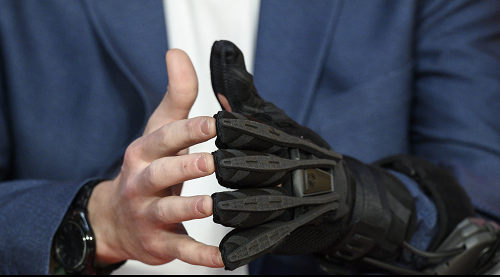
MotionMate is designed as an open glove orthosis for people with limited hand function, for example after a stroke or accident. Around 100 million people worldwide are affected, including 550,000 in Germany alone.
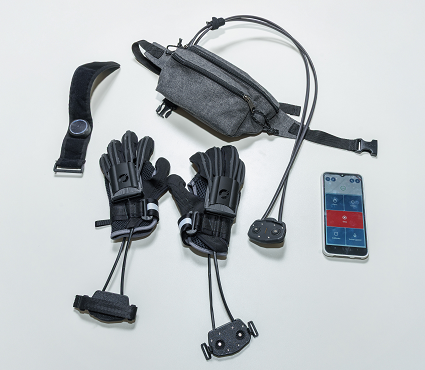
The system uses electric motors and cable-driven mechanisms to actively close the fingers and, unlike many existing solutions, to actively open them as well. This allows controlled support of gripping movements, based on the functional principle of tendons.
Unlike many existing orthoses, MotionMate’s development focuses on low weight and user-friendly handling, with the aim of enabling users to put on the device independently. Batteries and actuators are housed in a separate belt pack (650 g), keeping the orthosis itself light at 160 g. Depending on the user’s level of impairment, the system is controlled via movement signals from the user. A Bluetooth-connected control unit can be attached at different body locations, such as the chin, elbow, or the opposite hand. The system can also be operated via a smartphone app or by voice commands.
From Prototype to Serial Production
The intelligent active orthosis from Powered Orthotics is currently in the prototype stage and is being further developed for long-term use in collaboration with test users, supported by Würth Elektronik. Production is handled by Elbe Electronic GmbH.
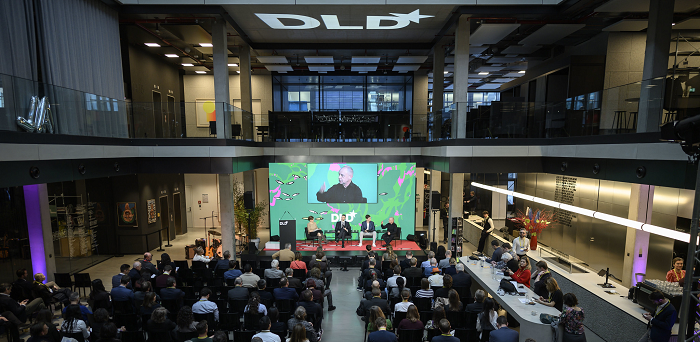
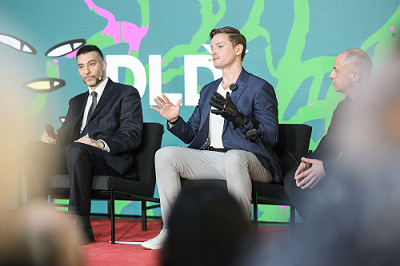
During a panel discussion at DLD, Alexander Gerfer, CTO of Würth Elektronik eiSos Group, presented the innovative design alongside Ryan Alicea, Co-founder & CEO, Powered Orthotics, and Prof. Dr. Lorenzo Masia, Professor of Intelligent Bio-Robotic Systems at the Technical University of Munich, who acts as scientific mentor for the project. The panel was moderated by journalist Jennifer Wilton, former Editor-in-Chief of WELT.
Steffi Czerny, Managing Director of DLD Media, stressed that innovation is driven by collaboration across startups, industry, and research. She described DLD’s role as convening these communities, so ideas can be translated into technologies with real-world impact.
More Independence in Daily Life
“When hand function is lost, it’s not just a medical symptom, it’s a daily barrier to independence, dignity, and participation in life,” explained Ryan Alicea. “At Powered Orthotics, we’re closing the gap between what people need and what existing solutions realistically deliver by building MotionMate: a 160g powered hand orthosis that supports intuitive opening and closing in a wearable, practical form. Our goal is simple: give people the ability to do more for themselves, more often, and to put control back where it belongs: in their own hands.”
Custom Solution from Würth Elektronik
“The power supply for an orthosis has to meet some pretty specific requirements,” added Guillermo Regidor, Design Engineer at Würth Elektronik, who led the design work for the project. “It needs to be compact, efficient, and also meet the strictest safety standards of protection classes IEC 60601-1 and 1 MOPP (Means of Patient Protection). After all, the device is worn directly on the body. What was required was a flyback transformer with an input of 12 to 15 V, an output of 12 V, and a power rating of 1.5 A. Our search for an off-the-shelf component quickly showed that none of the solutions exactly met our customers’ requirements. The safety regulations in particular were a critical factor. For this reason, we decided for a specially adapted new development.”
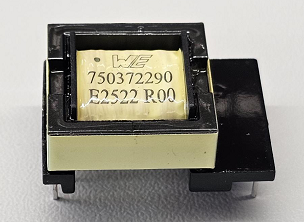
The custom transformer measures just 21.5 mm × 29 mm × 12 mm and weighs only 11.2 g. It operates at 98% efficiency and is optimized for automated mass production. In addition to this bespoke development, other components from Würth Elektronik are also used in the orthosis. Further development support includes tests in Würth Elektronik’s Waldenburg labs, for example assessing resistance to shock and vibration and temperature cycling.
On the Way to Serial Production
Following the initial prototype, 15 additional units will be produced and tested by users with relevant hand impairments in everyday life. Insights gained will then inform serial production, scheduled to begin in 2026.
“We are proud to work with Powered Orthotics on the MotionMate hand orthosis,” says Alexander Gerfer, CTO of Würth Elektronik eiSos Group. “Startups often face technical challenges alone, from power and safety to miniaturization and manufacturability. With our experience and custom solutions, we help turn the concept into a device that makes everyday tasks easier and supports users’ independence. MotionMate demonstrates what can be achieved when innovative startups and industry experts collaborate closely to solve challenges end-to-end.”