

Market Summary
According to latest research by Growth Market Reports, the global Artificial Intelligence Chipset market size reached USD 29.8 billion in 2024, demonstrating robust expansion driven by the rapid proliferation of AI-powered applications across industries. The market is expected to maintain a strong growth trajectory, registering a CAGR of 32.1% from 2025 to 2033. By 2033, the AI Chipset market is forecasted to attain a value of USD 356.7 billion. This impressive growth is primarily fueled by the surging demand for high-performance computing, accelerated adoption of AI in edge devices, and ongoing advancements in deep learning and neural network architectures.
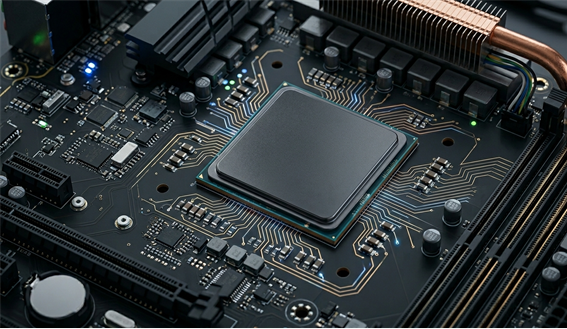
The Artificial Intelligence chipset market is rapidly transforming the global technology landscape. As AI applications expand across industries—from healthcare and finance to automotive and retail—the demand for specialized hardware capable of handling complex computations is surging. AI chipsets are designed to accelerate machine learning, deep learning, and neural network processing, enabling faster insights and real-time decision-making.
Key Growth Drivers
Rising Adoption of AI Across Industries
Organizations are embedding AI into core operations to improve efficiency, reduce costs, and enhance customer experiences. Industries such as healthcare use AI chipsets for diagnostic imaging, while financial institutions rely on them for fraud detection and risk analysis.
Expansion of Edge Computing
Edge AI is gaining momentum as businesses seek real-time processing without relying on centralized cloud systems. AI chipsets enable data processing directly on devices such as smartphones, drones, and IoT sensors, reducing latency and improving responsiveness.
Growth in Autonomous and Smart Technologies
The development of autonomous vehicles, smart cities, and robotics is fueling demand for high-performance AI processors. These technologies require rapid data analysis and decision-making, which AI chipsets are specifically designed to deliver.
Market Challenges
High Development Costs
Designing and manufacturing AI chipsets involves substantial research, advanced fabrication processes, and significant capital investment. These costs can limit entry for smaller companies and slow innovation in certain segments.
Power Consumption and Heat Management
AI workloads require intensive processing power, which can lead to high energy consumption and thermal management challenges. Manufacturers are focusing on energy-efficient designs to address these concerns.
Emerging Opportunities
Custom AI Chips and Industry-Specific Solutions
Companies are increasingly developing custom AI chips tailored to specific workloads. For example, chips optimized for medical imaging differ from those used in autonomous driving, creating opportunities for niche innovation.
AI in Consumer Electronics
Smartphones, wearables, and home automation systems are integrating AI features such as voice assistants, facial recognition, and predictive analytics. This trend is expanding the consumer market for AI chipsets.
Competitive Landscape
- NVIDIA Corporation
- Intel Corporation
- Advanced Micro Devices, Inc. (AMD)
- Qualcomm Technologies, Inc.
- Apple Inc.
- Samsung Electronics Co., Ltd.
- Alphabet Inc. (Google)
- IBM Corporation
- Huawei Technologies Co., Ltd.
- Xilinx, Inc. (now part of AMD)
Future Outlook
The future of the AI chipset market looks exceptionally promising. As AI becomes a foundational technology across sectors, demand for specialized processors will continue to rise. Advances in chip design, energy efficiency, and edge AI capabilities will further accelerate adoption. In the coming decade, AI chipsets will not only power intelligent applications but also redefine how industries operate, making them a cornerstone of the digital economy.