

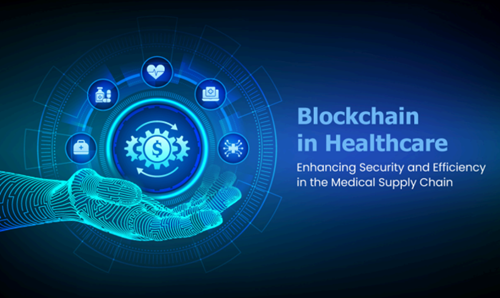
Blockchain in Healthcare – Healthcare today faces a critical challenge: managing sensitive data securely while ensuring it is accessible when needed. Patient records, insurance details, and clinical data are often scattered across multiple systems, creating inefficiencies and risks. Blockchain technology is emerging as a powerful solution that addresses these challenges by bringing security, transparency, and control into healthcare systems.
Blockchain is not just another technology trend. It represents a shift toward a more connected, secure, and patient-focused healthcare ecosystem.
Understanding Blockchain Technology in the Healthcare Ecosystem
Blockchain is a decentralized digital ledger that records information in a secure and structured way. Each record is stored in a “block” and linked to the previous one, forming a chain that is nearly impossible to alter.
Unlike traditional systems, blockchain does not rely on a central authority. Instead, data is distributed across multiple nodes, ensuring that every participant has access to the same verified information.
This decentralized approach makes blockchain highly suitable for healthcare, where trust, accuracy, and data integrity are essential.
Why Healthcare Needs Blockchain for Secure Data Management
Healthcare systems handle vast amounts of sensitive data, making them frequent targets for data breaches. Traditional centralized databases often create a single point of failure, increasing vulnerability.
Blockchain addresses this issue by distributing data across multiple systems, reducing the risk of unauthorized access.
Another major concern is data ownership. In many cases, patients do not have full control over their medical records. Blockchain changes this by allowing patients to manage and share their data securely.
By solving these core challenges, blockchain helps build a more secure and patient-centric healthcare system.
Key Benefits of Blockchain in Healthcare Systems
Blockchain offers several advantages that improve both operational efficiency and data security in healthcare.
One of the most important benefits is enhanced data security. Information stored on blockchain is encrypted and immutable, meaning it cannot be altered without consensus from the network.
Another key advantage is transparency. Every transaction is recorded and can be verified, reducing
fraud and increasing trust among stakeholders.
Blockchain also improves interoperability. It enables seamless sharing of patient data across hospitals, clinics, and laboratories, ensuring better coordination of care.
In addition, it reduces administrative costs by automating processes and minimizing the need for intermediaries.
These benefits make blockchain a strong foundation for modern healthcare systems.
Solving Data Fragmentation and Improving Patient Care
Efficiency
One of the biggest challenges in healthcare is fragmented patient data. Medical records are often stored in different systems, making it difficult for healthcare providers to access complete information.
Blockchain addresses this issue by linking data from multiple sources into a unified system. This
ensures that doctors have access to a complete and accurate patient history.
With better data availability, healthcare providers can make faster and more informed decisions, improving patient outcomes and reducing errors.
Real-World Use Cases of Blockchain in Healthcare Operations
Blockchain is already being applied in various areas of healthcare to improve efficiency and reliability.
Some of the key use cases include:
- Secure management of electronic health records
- Clinical trial data tracking and verification
- Medical supply chain management
- Automated billing and insurance processing
- Secure payment systems
These applications demonstrate how blockchain can streamline operations while ensuring data integrity and transparency.
Enhancing Healthcare Supply Chains and Drug Traceability
The healthcare supply chain involves multiple stakeholders, including manufacturers, distributors, and healthcare providers. Ensuring the authenticity and safety of medical products is a major concern.
Blockchain improves supply chain management by providing a transparent and traceable record of every transaction. This helps prevent tampering and ensures that medicines are genuine and safely delivered.
With blockchain, every step of the supply chain can be monitored, reducing risks and improving accountability.
Improving Trust and Transparency Across Healthcare Stakeholders
Trust is a critical factor in healthcare. Patients, doctors, insurers, and regulators all need access to accurate and reliable information.
Blockchain builds trust by creating a shared, tamper-proof system where all transactions are recorded and verified.
It also enables permission-based access, ensuring that only authorized individuals can view or modify data.
This level of transparency improves collaboration and reduces disputes across the healthcare
ecosystem.
Challenges in Adopting Blockchain in Healthcare Systems
Despite its potential, blockchain adoption in healthcare is still evolving. One of the major challenges is the lack of standardization and clear regulations.
Another issue is the integration of blockchain with existing legacy systems. Healthcare organizations often rely on outdated infrastructure, making implementation complex.
There is also a need for specialized technical expertise to design and manage blockchain solutions effectively.
Addressing these challenges is essential for wider adoption and long-term success.
The Future of Blockchain in Healthcare Innovation
Blockchain is gradually transforming healthcare into a more secure, efficient, and patient-focused system. As the technology evolves, its applications are expected to expand further.
With continuous advancements, blockchain has the potential to support personalized medicine, improve research processes, and enable better collaboration across healthcare networks.
Organizations that adopt blockchain early will be better positioned to adapt to future healthcare demands.
Conclusion: Building a Secure and Patient-Centric Healthcare System
Blockchain is reshaping the healthcare industry by addressing some of its most critical challenges. From securing patient data to improving transparency and efficiency, its impact is significant.
By enabling decentralized data management and enhancing trust among stakeholders, blockchain creates a more reliable and connected healthcare ecosystem.
As adoption grows, blockchain will play a key role in building a healthcare system that is not only secure but also more responsive to patient needs.