

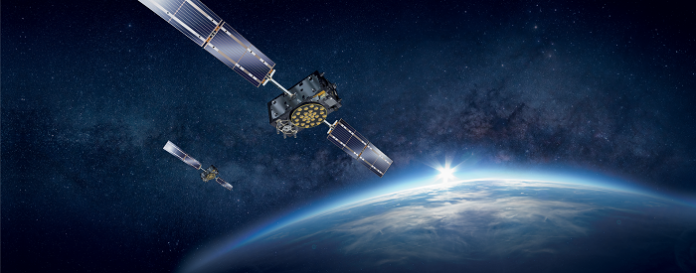
Europe has given fresh momentum to its Galileo navigation system following the successful launch on December 17 of two new satellites aboard an Ariane 6 rocket. This launch, the fourteenth of the program (L14), is one of the final three planned launches of first-generation (G1G) satellites. The new satellites will strengthen the global positioning, navigation, and timing services provided by the system.
The launch comes at a critical moment for the constellation, which faces the need to replace some of its oldest satellites. With millions of users worldwide routinely relying on Galileo services, this milestone ensures Europe’s ability to operate its own radionavigation system, something that is essential for sectors such as intelligent transportation, logistics, precision agriculture, defense, public safety, communications network operations, and energy generation and transmission.
GMV plays an essential role as the lead developer and operator of the Galileo ground control segment, the infrastructure that keeps the constellation operational 24 hours a day. From the centers in Oberpfaffenhofen, Germany, and Fucino, Italy, GMV’s solutions make it possible to monitor the health and position of each satellite, plan and execute orbital maneuvers, ensure signal integrity, and manage the critical operations of a system that is already an integral part of the daily activities of more than 4 billion users worldwide. Once again, the company’s contribution has been key to managing post-separation operations from the launch vehicle and ensuring the correct insertion of the new satellites into the constellation.
This launch paves the way for the L15 and L16 missions, which will complete the first generation of the system before transitioning to the second-generation Galileo satellites (G2G), currently under development. These will introduce advanced capabilities, greater accuracy, and enhanced resilience against interference and cyber threats, further strengthening Galileo’s role as a strategic infrastructure for Europe.
Statements by Miguel Romay, General Manager of GMV’s satellite Navigation Systems
“This launch marks a turning point for Galileo: not only does it guarantee that the constellation will continue to offer the current level of service, but it also opens the door to a new technological era. The second generation will bring a qualitative leap in precision and in the ability to operate in increasingly demanding environments.”
“GMV’s work ensures that the constellation is operational 24 hours a day, seven days a week, and that millions of users around the world have a reliable and secure service.”
“This new launch confirms that Europe is making steady progress in its space ambitions. The evolution of Galileo shows that we are capable of developing strategic infrastructures that strengthen our security, our economy, and our international presence.”
For more information about GMV, visit www.gmv.com