

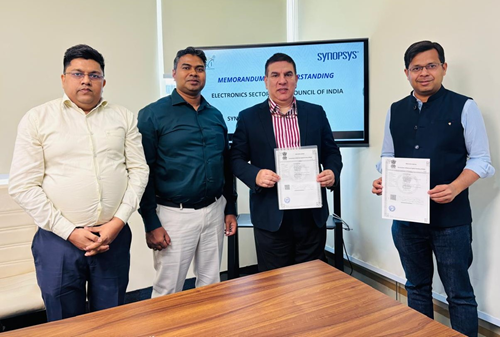
ESSCI Synopsys MoU – In a major boost to India’s semiconductor mission, the Electronics Sector Skills Council of India (ESSCI) has entered into a strategic partnership with Ireland-based Synopsys International Limited. This Memorandum of Understanding (MoU), recently signed at the ESSCI office in New Delhi, marks a significant step toward addressing the talent shortage in high-tech electronics and chip design domains.
Under the new framework, the two entities plan to organize intensive bootcamps, faculty development programs, and hackathons aimed at bridging the gap between academic learning and industry requirements. A key highlight of the pact is the implementation of training programs that align with national goals to enhance industry readiness among students across the country in alignment with the projects like PMKVY, ISM2.0, C2S, ESDM 2.0 etc. The partnership envisions technical integration in which ESSCI intends to mitigate the skill gap in Semiconductor design & engineering using the tools & platform provided by Synopsis and provide technological interventions through subject matter experts. Both parties will work together to conduct deep-tech trainings using advanced tools and will collaborate on joint certification for candidates completing the programs.
Welcoming the partnership, Madhvendra Singh, CEO, ESSCI, stated: “This collaboration with Synopsys is a cornerstone in our strategy to establish India as a global hub for semiconductor talent. By integrating industry-leading tools and global expertise into our skilling framework, we are ensuring that Indian students are trained on the same platforms used by the world’s top chip designers. Our goal is to create a seamless pipeline of ‘industry-ready’ engineers who can immediately contribute to the nation’s burgeoning ESDM ecosystem.”
As India accelerates its chip-making ambitions, this partnership between ESSCI and Synopsys is expected to play a pivotal role in creating the technical backbone required for the next generation of electronic innovation.