


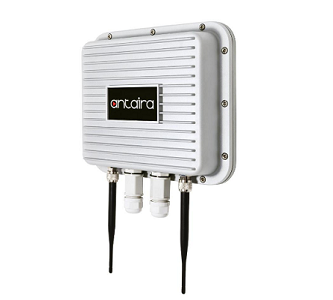
In industrial wireless deployments, one technology sits at the center of every high-performance network: the Wireless Distribution System (WDS) bridge. It is the fundamental building block that transforms isolated access points into a unified, scalable network fabric yet it remains one of the most misunderstood components in the field.
Whether connecting data across a sprawling manufacturing floor, linking multiple buildings on a corporate campus, or extending coverage across remote field sites, every WDS application demands one thing: reliable, intelligent network bridging.
WDS bridges eliminate the cost, complexity, and downtime risk of deploying wired Ethernet backbones in environments where cable is impractical or impossible.
Why Industrial Environments Demand WDS
For plant managers and network engineers alike, the challenge is familiar: industrial environments make traditional wired Ethernet backbones impractical, cost-prohibitive, or outright impossible. Moving cables through active production facilities, bridging across open yards, or connecting distributed sites on a campus introduces enormous installation costs and operational disruption.
Since the early days of IEEE 802.11 networking, engineers have solved this problem with WDS — the wireless interconnection of access points that replaces the wired backbone with a seamless, high-performance wireless bridge. The result is faster deployment, lower costs, and the flexibility to extend network coverage exactly where it is needed, without touching a conduit.
How WDS Bridge Configuration Works
A WDS deployment designates one device as the main access point — the main base station — which anchors the connection to the wired network. Additional access points, known as relay stations or remote base stations, connect wirelessly to the main base station and forward traffic between the core network and all downstream users and devices.
APs are configured in one of two bridge modes depending on deployment requirements:
- Point-to-Point: Two APs communicate via high-gain directional antennas, wirelessly joining two discrete LAN segments across distances that would be impossible or cost-prohibitive to cable.
- Point-to-Multipoint: A single main AP anchors connections to multiple remote APs simultaneously, enabling centralized network distribution across a large facility or multi-site campus.
In a point-to-multipoint configuration, all APs must share the same SSID, wireless channel, authentication mode, security settings, and LAN IP subnet range. Both the 2.4 GHz and 5 GHz bands support WDS bridging, however, the two bands cannot be bridged together within the same link.
Critical Design Considerations
AP Placement & Signal Strength: Every WDS hop introduces latency and reduces potential throughput. Placing APs too far apart compounds this effect, degrading link speed across the entire network. Strategic AP placement, optimized for signal strength and line of sight, is essential to maximizing WDS link performance.
Security & Access Control: Industrial networks are high-value targets. Restricting WDS access to authorized personnel requires strong wireless encryption. While WEP remains an option for legacy compatibility, WPA and WPA2 are the protocols of choice for modern deployments, delivering the authentication strength and encryption depth needed to protect critical infrastructure from unauthorized access.
Antaira WDS Bridge Solutions
Antaira delivers purpose-built WDS bridge hardware designed for the demands of real-world industrial environments from bridge-only devices to full-featured multifunction platforms.
- AMY-5133-AC-PD: A compact, cost-effective 802.11 5 GHz wireless AP/Client Bridge engineered for straightforward WDS deployments. Purpose-built, reliable, and ready to deploy.
- ARX-7235-AC-PD-T: A multifunction industrial powerhouse combining 802.11a/b/g/n/ac Wireless Access Point, Client, Bridge, Repeater, Router, NAT, and VPN all in a single PoE PD device. One platform. Every function.
Both platforms deliver secure, stable wireless bridging with the performance margins that industrial operations require. And they are joined by Antaira’s full portfolio of industrial wireless routers, IoT gateways, access points, clients, and repeaters, all engineered to the same exacting standard.
Every Antaira wireless device is hardened to endure the conditions that would destroy standard network equipment: extreme temperatures, high humidity, vibration, shock, and industrial-grade electromagnetic interference. This is not ruggedization as an afterthought; it is industrial-grade engineering from the ground up, ensuring your WDS infrastructure performs flawlessly across the full lifecycle of your operation, regardless of environment.
Antaira’s engineering team has deep expertise in designing and deploying WDS solutions across complex industrial environments from single-site point-to-point links to large-scale, multi-hop point-to-multipoint networks.
Learn more at www.antaira.com.