


Semiconductor Die Placement R&D – Fuji Corporation (headquarters: Chiryu, Aichi; Representative Director, President and CEO: Joji Isozumi; hereinafter referred to as “Fuji”) has joined the Semiconductor Assembly Test Automation and Standardization Research Association (SATAS), established in April 2024. Fuji has been officially designated to lead the research and development (R&D) for die placement processes (die attach), which requires high positioning accuracy, within SATAS’s R&D initiative focused on the automation and standardization of semiconductor back-end manufacturing.
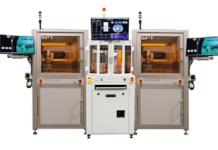
Consequently, our SMT pick and place machine, the NXTR A model, has been selected for use in this R&D project. Through research and development of die placement process and its automation technologies using the NXTR, Fuji will contribute to advancing automation and standardization in semiconductor back-end manufacturing.
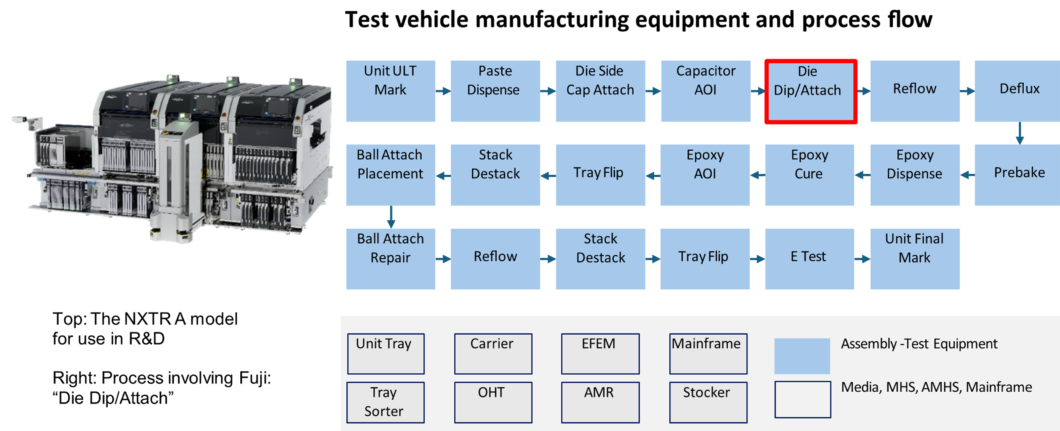
Die placement process that requires high accuracy
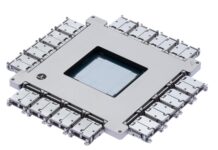
Die placement is one of the critical processes that determine the performance and reliability of next-generation semiconductor packages, which are becoming increasingly advanced and higher-density. In recent years, semiconductor manufacturing has demanded higher placement accuracy and stable process control due to the advancement of chiplet architectures and 3D packaging. Fuji will be responsible for research and development of high-accuracy die placement processes.
A technological foundation that achieves both high accuracy and automation
At Fuji, we have honed our high-accuracy placement technology in the SMT field while also developing our proprietary smart factory concept. Through these initiatives, we have put automation technology into practical use across entire production lines, including parts supply. We have established a technological foundation capable of meeting the demands for high accuracy and automation required in the semiconductor back-end process. This research and development builds on our technological foundation.
Practicality and reliability built on a standard-machine platform
The NXTR A model used in this research and development project employs a configuration based on the standard specifications, combined with options tailored for this specific research and development effort.
By using our standard machines rather than dedicated machines as the foundation, we ensure practicality and high reliability with future production deployment in mind.
Comment from Takeshi Sato, Fuji Robotic Solutions Division General Manager
Fuji’s assigned field within SATAS has now been finalized, and our machine has been adopted for R&D purposes in the die placement process. This field, within increasingly sophisticated semiconductor back-end manufacturing, demands a higher level of placement accuracy and stable automation technology. We will steadily advance R&D as a member of the project by integrating the high accuracy placement technology and automation technology we have cultivated over the years.
Future outlook
Going forward, Fuji will build upon the technical insights and expertise in the semiconductor back-end manufacturing field gained through this initiative and advance further technological development with an eye toward applying these technologies in our mass-production machines. Furthermore, by deepening the integration of placement technologies and related automation technologies throughout the entire production line, we aim to contribute to production efficiency and stable operation in semiconductor manufacturing, while also strengthening our technical foundation.