

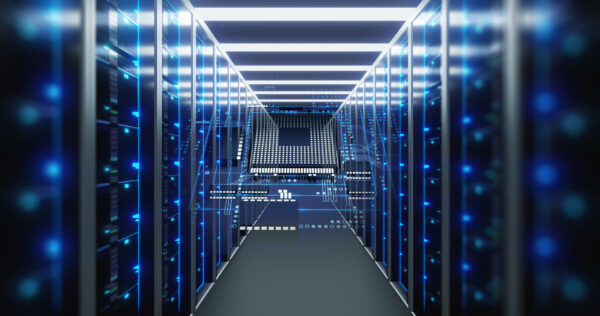
The next wave of digital growth will be measured not only in data, but in compute. Artificial intelligence, cloud services, 5G, industrial automation, and connected devices are placing unprecedented demands on the infrastructure that powers the digital economy. Modern data centers are no longer passive facilities for storage; they are high-density computational ecosystems supporting AI training, inference, scientific discovery, digital commerce, and national digital infrastructure.
As AI workloads grow in scale and intensity, building more capacity is no longer enough. Performance, power delivery, thermal behaviour, reliability, sustainability, and operational resilience must be engineered as one interconnected system spanning silicon, advanced packaging, boards, servers, racks, cooling infrastructure, power systems, and facilities.
This is why simulation is becoming a strategic infrastructure capability. Physics-based simulation, electronic design automation, multiphysics analysis, virtual prototyping, and digital twins help organizations understand design trade-offs before deployment, reduce technical and commercial risk, and accelerate decisions across the data center lifecycle.
The New Engineering Reality
AI data centers are fundamentally different from traditional enterprise facilities. Large GPU and accelerator clusters operate at high utilization for extended periods, creating concentrated heat loads, higher rack power densities, and dynamic workload behaviour. Design assumptions based on average utilization, static margins, or isolated subsystem analysis are increasingly inadequate.
Simulation provides a predictive foundation. Engineers can evaluate airflow, liquid-cooling loops, power distribution, signal integrity, thermal hotspots, mechanical stress, and workload-driven operating conditions before hardware is built or facilities are commissioned. This allows engineering teams to compare alternatives early and make decisions objectively with confidence.
The value is tangible: fewer redesign cycles, better capacity planning, stronger resilience, faster time to market, and improved Power Usage Effectiveness, or PUE. PUE is calculated as total facility energy divided by IT equipment energy. A legacy or standard level facility may operate around 1.5–2.0, while highly efficient hyperscale designs often target the 1.0–1.2 range; every 0.1 improvement can translate into meaningful energy and cost savings at multi-megawatt scale. By modelling airflow, cooling setpoints, power losses, workload placement, and operating scenarios, simulation helps improve PUE without compromising reliability.
From Silicon to Facility: A Connected Simulation Continuum
Every data center begins with silicon. Advanced processors, GPUs, AI accelerators, networking devices, and memory systems must deliver higher performance while managing power, heat, signal integrity, and reliability. Electronic design automation and chip-level simulation help evaluate power distribution, electromagnetic effects, timing, thermal behaviour, and reliability before physical designs are committed.
The challenge continues through advancedpackaging and system integration. Chiplets, 2.5D and 3D integration, high-bandwidth memory, heterogeneous architectures, and co-packaged optics are improving compute density, bandwidth, and energy efficiency. Co-packaged optics brings optical engines closer to the switch ASIC, reducing electrical trace length, lowering signal loss, improving bandwidth density, and reducing power per bit for large AI fabrics. These innovations also create complex thermal, structural, photonic, and electromagnetic interactions. Multiphysics simulation helps evaluate these trade-offs together, including signal integrity, package thermals, mechanical reliability, and rack-level thermal impact.
At the rack and facility level, thermal management becomes imperative for core architectural decisions. Simulation supports airflow analysis, direct-to-chip liquid cooling, immersion cooling, coolant-loop optimization, thermal compliance, and facility layout planning—especially important in India, where high ambient temperatures, land constraints, and water availability can influence design choices.
Power infrastructure is equally strategic because AI rack densities are moving far beyond traditional enterprise levels. Conventional racks often operated in the 5–15 kW range, while AI racks are commonly moving into 50–120 kW and, in some liquid-cooled designs, beyond 100 kW. This changes how facilities must plan distribution, redundancy, UPS capacity, backup generation, microgrids, renewable integration, and energy storage. Simulation helps model peak loads, failure scenarios, voltage drops, thermal coupling, and energy flows so operators can improve resilience, reduce losses, lower total cost of ownership, and support sustainability goals.
Digital Twins Bring Simulation into Operations
The next step is connecting simulation with live operations through digital twins. A data center digital twin combines design models with operational data to create a virtual representation of physical infrastructure, including IT loads, cooling systems, electrical distribution, controls, and environmental conditions.
Digital twins help teams compare layouts, validate cooling strategies, evaluate expansion plans, verify performance during commissioning, and optimize live operations. They also support predictive maintenance, failure-mode testing, and continuous efficiency improvements without disrupting infrastructure.
A Strategic Opportunity for India
McKinsey research shows that by 2030, data centers are projected to require $6.7 trillion in capital expenditures worldwide to keep pace with the demand for compute power. The global data center sector capacity is also expected to reach 200 GW by 2030, with APAC region projected to expand from 32 GW to 57 GW as per JLL 2026 Global Data Center Outlook. India’s data center expansion is being driven by cloud adoption, enterprise digitization, digital public infrastructure, AI workloads, and local data processing needs. At the same time, developers must address climate diversity, high ambient temperatures, grid variability, land availability, and sustainability expectations.
Simulation can help India move beyond capacity expansion toward intelligent infrastructure development. It enables informed decisions on site layout, cooling architecture, electrical design, energy strategy, water usage, lifecycle performance, and scalability before capital is committed at scale.
The Road Ahead
The future of AI data centers will depend on the ability to engineer performance, reliability, efficiency, and sustainability together. That requires a connected view of the entire system—from silicon and software to cooling, power, facilities, and operations.
Organizations that adopt simulation and digital twins early will be better positioned to reduce risk, accelerate deployment, optimize energy use, improve PUE, and operate infrastructure with greater confidence. In the AI economy, simulation is no longer optional; it is becoming part of the infrastructure itself.