

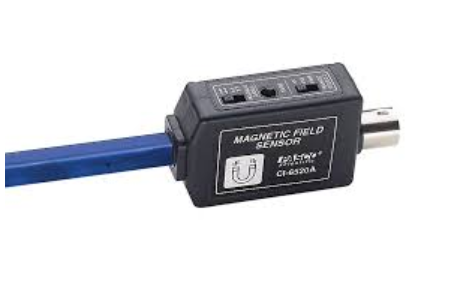
The magnetic field sensors market is witnessing significant growth, driven by the increasing demand for advanced technologies across various industries, including automotive, consumer electronics, healthcare, and industrial automation. Magnetic field sensors are critical components in a wide range of applications, from navigation and position sensing to detecting magnetic fields for control and measurement purposes. These sensors operate by detecting and measuring the strength and direction of magnetic fields, providing accurate data for electronic systems. This article explores the current trends, innovations, and growth prospects in the magnetic field sensors market.
Global Magnetic Field Sensors Market generated revenues of US$ 6,224.80 million in 2024. Demand is projected to grow at a CAGR of 6.0% from 2025 to 2032, with the market expected to reach US$ 9,865.20 million by 2032.
Technological Advancements and Innovations
Magnetic field sensors have evolved considerably over the past decade, with advancements in sensor technologies improving performance and accuracy. The transition from traditional magnetic sensors to newer, more sensitive and reliable technologies, such as Hall effect sensors, giant magnetoresistance (GMR) sensors, and anisotropic magnetoresistance (AMR) sensors, has been a major driving force behind the market’s growth.
Hall effect sensors, for instance, are widely used in automotive applications for position sensing and speed detection. Meanwhile, GMR sensors offer improved sensitivity and resolution, making them ideal for high-precision applications like data storage and navigation systems. The introduction of MEMS-based (Micro-Electro-Mechanical Systems) magnetic sensors has also been a game-changer, enabling the development of miniaturized sensors that provide high accuracy while maintaining low power consumption.
In addition to improvements in sensor technologies, the integration of magnetic sensors with other technologies such as the Internet of Things (IoT) and artificial intelligence (AI) is reshaping the way magnetic sensors are used. These integrations are making magnetic field sensors smarter and more adaptable to dynamic environments, contributing to their growing presence in a variety of new and emerging applications.
Applications of Magnetic Field Sensors
The magnetic field sensors market is highly diversified, with applications spanning several key industries. One of the most prominent sectors driving demand is the automotive industry. Magnetic sensors are increasingly used for various functions in modern vehicles, including speed and position sensing, electric power steering, and in advanced driver-assistance systems (ADAS). As the automotive industry moves toward electric vehicles (EVs) and autonomous driving technologies, the need for highly accurate and reliable magnetic field sensors is set to rise even further.
Another significant sector utilizing magnetic field sensors is the consumer electronics industry. Smartphones, wearables, and other portable devices are incorporating these sensors for functions such as proximity detection, compass applications, and motion sensing. Magnetic sensors are also playing a key role in medical applications, where they are used for patient monitoring systems, diagnostics, and medical imaging.
In industrial automation, magnetic field sensors are deployed for non-contact position sensing, flow control, and safety applications. With the rise of Industry 4.0 and the increasing use of automated systems, the demand for magnetic field sensors in industrial settings is expected to grow rapidly.
Geographical Trends and Market Dynamics
Geographically, North America, Europe, and Asia-Pacific are the leading regions in the magnetic field sensors market. North America, particularly the United States, is a key hub for innovation, with numerous companies focusing on developing advanced magnetic sensor technologies. The region also benefits from a well-established automotive industry, driving demand for magnetic sensors in vehicles.
Europe is home to several automotive and industrial giants, which contributes to the strong demand for magnetic sensors, especially in precision applications. The region’s focus on automation and the rise of electric vehicles have further fueled market growth.
Asia-Pacific, on the other hand, is experiencing rapid expansion in the magnetic field sensors market, primarily due to the booming electronics manufacturing sector and the increasing demand for consumer electronics. Countries such as China, Japan, and South Korea are leading the way in the development and production of magnetic sensors, benefiting from a robust manufacturing ecosystem and a growing consumer base.
Challenges and Restraints
While the magnetic field sensors market is expanding, several challenges could impact its growth trajectory. One of the primary concerns is the high cost of advanced magnetic sensor technologies. Although these sensors offer superior performance, their high production costs can deter some companies from adopting them, particularly in cost-sensitive applications. Additionally, the complexity of integrating these sensors with other technologies and ensuring their reliability in harsh environments presents technical hurdles.
Another challenge is the increasing competition in the market, with numerous players vying for market share. To maintain a competitive edge, manufacturers must continue to innovate and offer cost-effective solutions while ensuring high levels of performance and reliability.
Conclusion
The magnetic field sensors market is poised for substantial growth, fueled by technological advancements, increased demand across a variety of industries, and the rise of automation and smart technologies. With the automotive, consumer electronics, and industrial sectors leading the charge, magnetic sensors are becoming an integral part of many modern applications. However, the market must navigate challenges such as cost and competition to fully capitalize on the opportunities ahead. As innovation continues and new use cases emerge, the future of the magnetic field sensors market looks promising.
For more information, visit magnetic field sensors market.