


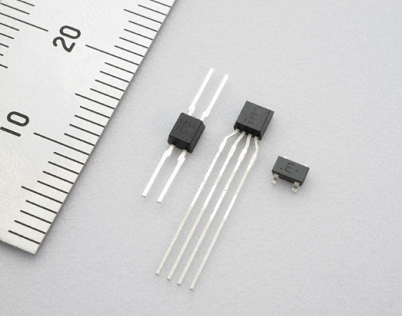
Asahi Kasei Microdevices Corporation (AKM) has announced that its commercialization of thin-film Hall elements, initiated in 1983, has been recognized as an IEEE Milestone by the Institute of Electrical and Electronics Engineers (IEEE). The IEEE Milestone program honors historic achievements that represent groundbreaking innovations in electrical and electronic engineering. To be recognized, at least 25 years must have passed since the development, and the achievement must have made significant contributions to society and industry.
The 1983 launch of AKM’s HW Series marked a major milestone in the successful mass production of magnetic sensors using thin-film Hall elements, laying the foundation for the technology’s evolution and broader adoption in consumer electronics. Today, thin-film Hall elements are recognized as one of the standard magnetic-sensing technologies found in a wide range of electronic devices globally.
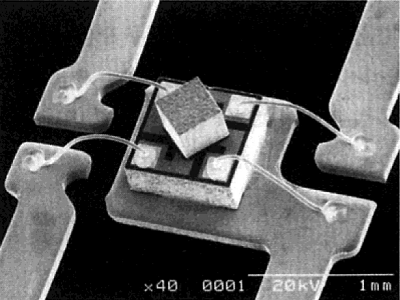
Early thin-film Hall elements lacked sensitivity and suffered substantial reliability issues, particularly regarding thermal stability. In response, AKM placed a thin-film indium antimonide (InSb) layer between two ferrites to concentrate magnetic flux and substantially boost detection sensitivity. AKM then implemented a three-layer electrode structure that allowed for gold wire bonding, greatly enhancing thermal stability and the durability required for mass production. These innovations enabled the full-scale industrialization of these devices: To date, over 50 billion units of Hall sensor products based on this technology have been shipped worldwide. Since its introduction, AKM’s Hall elements have been widely used in brushless motors, such as those in cooling fans for personal computers and servers, enabling further miniaturization of information technology (IT) infrastructure and consumer electronics. Products based on this technology have also contributed to energy conservation by allowing for the development of more efficient heating, ventilation, air conditioning, and refrigeration equipment.
AKM continues to expand magnetic sensing into new domains, including precision position detection and current sensing. These advancements have improved smartphone camera performance and enhanced the efficiency and driving range of electric vehicles. The technologies developed through this program have also been applied to infrared sensors, LEDs, and other device categories. Satoshi Takehara, Executive Officer of Asahi Kasei Microdevices, commented, “We are grateful to our customers for their longstanding trust in our thin‑film high‑sensitivity Hall elements, as well as to our suppliers and stakeholders for their continued support throughout many years of production. This IEEE Milestone recognition encourages us to further strengthen the quality and reliability of our products while advancing technological development that meets the evolving needs of society.”
Asahi Kasei positions Electronics as a First Priority business in its medium-term management plan. This recognition illustrates Asahi Kasei’s long-term commitment to driving long-term, sustainable growth through its electronic materials and components.
To learn more about Asahi Kasei’s Hall sensor products, visit https://www.akm.com/us/en/products/hall-sensor/what-makes-akm-different/.