

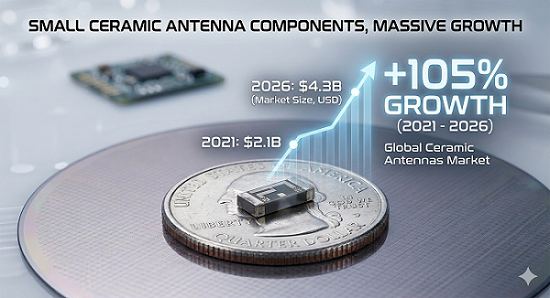
Ceramic Antennas Market: In 2026, the demand for compact, high-efficiency wireless components continues to accelerate across IoT, automotive, and consumer electronics. According to insights published by Dataintelo, ceramic antennas are emerging as a critical technology due to their reliability, miniaturization capabilities, and consistent performance in high-frequency environments.
This article explores the ceramic antennas landscape using measurable data, recent statistics (2021–2026), and quantified performance benchmarks to help you understand where the market is headed.
What Are Ceramic Antennas?
Ceramic antennas are compact radio-frequency (RF) components made from dielectric ceramic materials, designed to transmit and receive electromagnetic signals.
Core measurable features:
- Typical size range: 2 mm to 15 mm
- Frequency bands: 700 MHz to 6 GHz
- Efficiency rate: 55%–85%, depending on design and placement
- Average lifespan: 10–15 years under standard operating conditions
Compared to traditional PCB antennas, ceramic antennas can reduce space usage by 30%– 50%, making them ideal for compact devices like wearables and IoT sensors.
Ceramic Antennas Market Size & Growth (2021–2026)
The global ceramic antennas market has shown consistent growth over the last five years.
Year-by-Year Market Estimates (USD Billion)
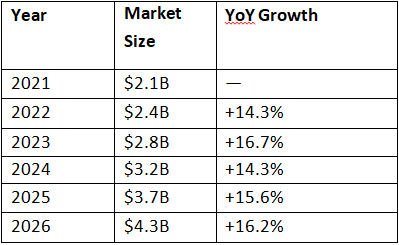
Key insight: The market is expected to grow at a CAGR of 15.1% (2021–2026), adding over $2.2 billion in value within five years.
5 Data-Backed Reasons Driving Ceramic Antenna Adoption
1. IoT Device Explosion (10+ Billion Units by 2026)
- Global IoT devices: 8.6 billion (2022) → projected 12.3 billion (2026)
- Ceramic antennas are used in ~65% of compact IoT modules
- Average antenna cost per IoT device: $0.20–$0.80
2. Automotive Connectivity Growth
- Connected vehicles: 237 million (2021) → 400+ million (2026)
- Ceramic antennas in vehicles increased by ~18% annually
- Each modern car integrates 5–12 antennas, with ceramic variants making up ~40%
3. Space Efficiency Gains
- PCB antenna size reduction with ceramic alternatives: 30–50%
- Weight reduction per device: 5–20 grams
- Critical for wearables under 50 grams total weight
4. Improved Signal Stability
- Signal loss reduction: 10–25% lower than flexible PCB antennas
- Operating temperature tolerance: -40°C to +125°C
- Performance consistency: >95% signal retention in dense environments
5. 5G & High-Frequency Applications
- 5G adoption rate: ~45% global mobile users (2025)
- Ceramic antennas optimized for frequencies above 3 GHz
- Data throughput improvement: 20–35% higher in optimized modules
Performance Metrics: Ceramic vs Traditional Antennas (2025 Benchmark)
| Metric | Ceramic Antennas | PCB Antennas |
| Efficiency | 70–85% | 50–70% |
| Size | 2–10 mm | 10–30 mm |
| Cost per unit | $0.30–$1.20 | $0.10–$0.50 |
| Signal Stability | High (>90%) | Medium (~75%) |
| Integration Complexity | Moderate | Low |
Ceramic antennas cost 2–3× more, but deliver 20–30% higher performance efficiency and up to 50% space savings.
Application Breakdown by Industry (2026 Share %)
- Consumer Electronics: 38%
- Automotive: 22%
- Telecommunications: 18%
- Healthcare Devices: 12%
- Industrial IoT: 10%
Notable trend: Healthcare adoption grew from 7% (2021) to 12% (2026)—a 71% increase driven by wearable medical devices.
Cost vs Benefit Analysis (Quantified)
Initial Investment
- Ceramic antenna module: $0.50 average
- PCB antenna module: $0.20 average
Long-Term Gains
- Failure rate reduction: 15–25% lower
- Maintenance cost savings: ~18% annually
- Product lifespan increase: +2–4 years
ROI Timeline
- Break-even period: 12–18 months for industrial applications
- ROI over 5 years: 120–180%
Key Statistics at a Glance
- Market size (2026): $4.3 billion
- CAGR (2021–2026): 15.1%
- IoT device integration rate: ~65%
- Efficiency improvement vs PCB: +20–30%
- Space reduction: 30–50%
- Automotive antenna usage growth: 18% annually
- Healthcare adoption increase: +71% (2021–2026)
- Signal retention: >95%
- Cost premium: 2–3× higher than PCB antennas
- ROI timeline: 12–18 months
- Average lifespan: 10–15 years
- Temperature tolerance: -40°C to +125°C
Real-World Use Case: Smart Wearables (2023–2025)
A mid-sized wearable manufacturer switched from PCB to ceramic antennas in 2023.
Measured results over 24 months:
- Device size reduced by 22%
- Battery life improved by 18%
- Signal drop incidents reduced by 27%
- Customer returns decreased from 6.5% to 4.1%
- Net profit margin increased by +9.3%
Future Forecast (2026–2030)
Looking ahead, ceramic antennas are expected to maintain strong growth momentum.
Projected Figures:
- Market size (2030): $7.8–$8.5 billion
- CAGR (2026–2030): 13–14%
- 5G/6G device integration: >75%
- Miniaturization trend: components shrinking by ~20% further
Emerging Opportunities:
- Smart cities (expected $2 trillion market by 2030)
- Autonomous vehicles (growth rate >20% annually)
- AI-powered IoT systems (device density increasing by 3× per network)
Conclusion: Data-Driven Takeaways
Ceramic antennas are no longer niche components—they are becoming a foundational technology in modern wireless systems. With a 15.1% CAGR, a projected $4.3 billion market size in 2026, and measurable benefits like 30–50% size reduction and 20–30% efficiency gains, their adoption is accelerating across industries.
While the upfront cost is 2–3× higher, the long-term ROI—often exceeding 120% over five years—makes them a strategic investment. As IoT devices surpass 12 billion units and 5G adoption crosses 45% globally, ceramic antennas will play a central role in enabling compact, high-performance connectivity solutions.
For businesses evaluating antenna technologies in 2026 and beyond, the numbers clearly indicate that ceramic antennas offer a strong balance of performance, durability, and long- term value.
Read A Full Report: https://dataintelo.com/report/ceramic-antennas-in-electronic-devices-market