


That distinction matters this month. As delegates gather in Doha for the ITU Plenipotentiary Conference 2026 (PP-26), ITU’s new Facts and Figures 2026 reports that 5G now reaches 59% of the world’s population. Policy can push that number higher. But once the sites are on air, engineers face a blunter question: does the network actually work where people live, commute and make calls? Answering it is the job of RF drive testing and Voice over New Radio (VoNR) benchmarking.
Why 5G is harder to verify than LTE
5G New Radio (NR) stacks low-band coverage layers under mid-band capacity layers, transmits its synchronization signals in beams, and increasingly runs in standalone (SA) mode on a 5G core. Each adds variables a planning tool cannot fully model: terrain, building materials, foliage, traffic load and handset behavior.
Voice is where these weaknesses show first. VoNR carries calls natively over 5G SA and the IMS core instead of handing them down to LTE through EPS fallback, the interworking procedure specified in 3GPP TS 23.502. It keeps the phone on 5G during the call, but only if NR coverage, mobility and core signaling all hold up. A weak spot in any of them surfaces as a failed call, a slow setup or choppy audio.
Plan the drive before you drive
A drive test is only as good as its design. Before the vehicle leaves the depot, pin down:
- The objective. Site acceptance, cluster optimization, complaint troubleshooting and competitive benchmarking each need different routes and scripts.
- The route. Cover highways, rail corridors and known trouble spots, and deliberately include cell edges and handover zones, not just the strongest-signal streets.
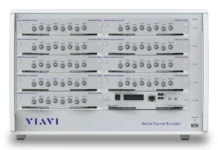
- The toolkit. Pair commercial handsets, which show what subscribers experience, with an RF scanner, which measures every detectable cell and beam regardless of network decisions.
- Time and position. Every sample needs an accurate timestamp and location, so precision timing and GNSS positioning that stays resilient to jamming and interference are quiet but essential foundations.
- Repeatability. Lock down time windows, device models, firmware and scripts so results can be compared drive after drive.
Modern 5G drive testing platforms run several devices and services in parallel, collecting RF, data and voice measurements in a single pass, which keeps long rural routes affordable.
The RF KPIs that matter
For NR, the core radio measurements are defined in 3GPP TS 38.215 and are based on the SS/PBCH block (SSB):
| KPI | What it tells you |
| SS-RSRP | Received signal power, the primary indicator of coverage |
| SS-RSRQ | Signal quality (N × SS-RSRP divided by NR carrier RSSI), sensitive to load and interference |
| SS-SINR | Signal to interference plus noise ratio, a strong predictor of throughput and voice quality |
Alongside these, log the serving cell and beam index, neighbors, throughput in both directions, latency, and every mobility event: handover attempts, successes, failures and drops back to LTE. Plot SINR against handover events along the route, and overshooting cells, missing neighbor relations and pilot pollution tend to jump off the map.
VoNR: measure what callers actually hear
A call that connects but sounds like it is coming through a tin can is still a failure in the subscriber’s eyes. VoNR benchmarking therefore layers service KPIs on top of the RF picture:
- Accessibility: IMS registration success rate, call setup success rate and call setup time.
- Retainability: call drop rate, especially through handovers and at cell edges.
- Integrity: speech quality as a Mean Opinion Score (MOS), measured objectively with ITU-T P.863 (POLQA), plus mouth-to-ear delay, packet loss and jitter. For delay, ITU-T G.114 recommends keeping one-way transmission time below 150 ms for most voice applications.
- Mobility: how often call setups trigger EPS fallback instead of staying on NR, and how often ongoing calls hand over from NR to LTE and continue as VoLTE.
Automated VoNR MOS testing makes this practical at scale. Scripted mobile-originated and mobile-terminated calls between test devices produce hundreds of scored samples per drive, replacing subjective listening with repeatable numbers.
Benchmarking without bias
Comparing operators only means something if the comparison is fair. ETSI TR 103 559 sets out best practices for robust network QoS benchmark testing and scoring. Its core principles include:
- Test every network at the same time, on the same route, from the same vehicle.
- Use identical handset models and firmware, with comparable subscriptions.
- Fix call duration, pauses between calls and speech samples.
- Collect enough samples per area for statistically meaningful results.
- Publish the methodology so others can reproduce it.
From raw logs to real fixes
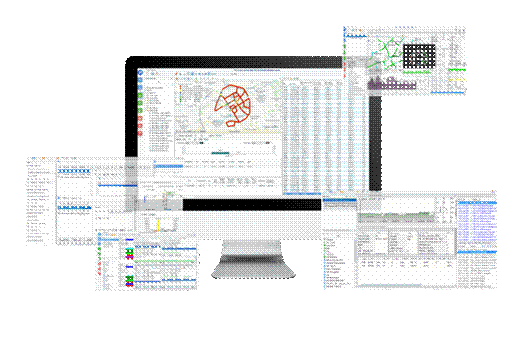
Collecting data is the easy part. The value lies in post-processing that ties every failed or poor-quality call to the radio conditions, signaling and cell configuration at that moment.
Picture a typical case. Calls keep dropping on the same stretch of highway, always in the same handover zone. The logs show SS-RSRP that looks perfectly healthy, but SS-SINR collapses a few seconds before each drop, and the scanner reveals a beam from a distant site arriving almost as strong as the serving cell. That is overshooting, not a coverage hole. A downtilt change on the distant site, a re-drive and a clean run of calls close the case. The opposite pattern, a slow setup under clean radio conditions, points away from the radio and toward the core or IMS.
As operators bring AI into network operations, this discipline matters even more, because AI-driven analytics are only as good as the data behind them. Fix, re-drive, confirm.
Roads are not the whole story, either. Indoor walk tests cover malls, hospitals and stations, and drone-based testing is emerging to verify vertical coverage for low-altitude services.
Measurement turns targets into results
A coverage percentage is a policy metric. A dropped call on a brand-new 5G site is an engineering problem. PP-26 can help push the first number up, but only disciplined measurement can show whether the second has been solved. As 5G spreads into new regions and voice moves fully onto SA networks, the operators that measure carefully will be the ones that keep the promise their coverage maps make.