

Agricultural equipment has relied on diesel engines and hydraulic systems for decades, but battery-powered machinery is beginning to appear on farms across North America. This shift affects not only how equipment operates but also how farmers maintain their fleets, what skills repair technicians need, and which components fail most often. Understanding these changes helps farm operators make informed decisions about equipment purchases and maintenance planning.
The Maintenance Advantage of Electric Drive Systems
Electric motors contain fewer moving parts than internal combustion engines. A typical diesel tractor engine has pistons, valves, camshafts, fuel injectors, and turbochargers that require regular service intervals. Electric motors eliminate these components entirely, reducing the number of maintenance tasks. Oil changes, filter replacements, and cooling system flushes remain necessary for tractors with diesel engines, but electric alternatives require none of these services for their drive systems.
This reduction in maintenance tasks does not mean electric equipment is maintenance-free. Battery packs require thermal management systems to prevent overheating, and these systems need inspection. Electrical connections must be kept clean and tight to prevent resistance that can cause heat buildup. The regenerative braking systems common in electric farm equipment need periodic checks to ensure they capture energy efficiently during deceleration.
Battery Management and Replacement Costs
Lithium-ion batteries degrade over time regardless of use patterns, though heavy discharge cycles accelerate this process. Most agricultural battery packs are designed to retain 70 to 80 percent of their original capacity after several thousand charge cycles. For equipment that operates daily during planting and harvest seasons, this translates to several years of service before capacity loss becomes noticeable.
Replacement costs for battery packs remain the largest concern for farmers considering electric equipment. Unlike engine rebuilds, which can extend the life of diesel tractors at moderate expense, battery replacement often represents a significant portion of the equipment’s original value. Farmers must factor this eventual cost into their total ownership calculations. Some manufacturers offer battery leasing programs to spread this expense over time, though these arrangements add ongoing costs that traditional equipment does not carry.
Impact on Hay and Forage Operations
Hay production equipment has particularly demanding duty cycles. Balers, mowers, and rakes operate for extended periods during narrow weather windows when conditions are right for cutting and baling. Battery capacity becomes a limiting factor during these intensive work periods. A diesel-powered baler can refuel in minutes and continue working, while battery-powered alternatives require charging time that can interrupt operations during critical harvest windows.
For farmers managing hay operations across Tennessee, Kentucky, and Illinois, this operational reality shapes equipment decisions. Traditional repair services remain essential for maintaining the diesel-powered fleets that most operations depend on. Facilities offering tractor repair services and agricultural equipment maintenance understand that new holland hay equipment and similar conventional machinery will continue to dominate hay production for the foreseeable future, particularly in regions where charging infrastructure is limited and work schedules are dictated by weather patterns rather than planned intervals.
Training Requirements for Technicians
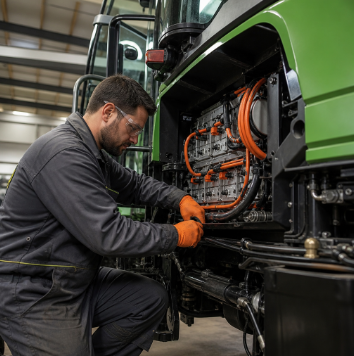
Repair shops that have serviced diesel equipment for decades now face the need to train technicians in high-voltage electrical systems. Working on battery packs rated at 400 volts or higher requires specific safety protocols that differ fundamentally from mechanical repairs. Technicians must understand battery management systems, power electronics, and diagnostic software that reads error codes from electronic control units rather than mechanical symptoms.
This training gap affects rural areas more severely than urban regions. Agricultural equipment dealers in smaller communities may struggle to justify the cost of certification programs and specialized diagnostic tools when only a handful of electric machines operate in their service area. The result is a transitional period where farmers with electric equipment may face longer wait times for repairs or need to transport machines to distant service centers with qualified technicians.
Safety Considerations in Farm Equipment Electrification
Electric farm equipment introduces new safety concerns alongside its operational benefits. High-voltage systems remain energized even when the equipment is turned off, creating shock hazards during maintenance or after accidents. Battery fires, though rare, burn intensely and require specialized extinguishing methods that differ from diesel fuel fires. Farmers and technicians accustomed to conventional machinery safety protocols must learn additional precautions specific to electrical systems.
The silent operation of electric motors also creates situational awareness challenges. Diesel engines announce their presence with noise and exhaust, alerting nearby workers to moving equipment. Electric tractors and implements operate quietly enough that workers may not notice approaching machinery, particularly in noisy environments like grain handling facilities or livestock barns. This characteristic requires deliberate changes to farm safety practices and communication protocols among crew members.
The Role of Hybrid Systems
Many manufacturers are introducing hybrid equipment that combines diesel engines with electric drive systems rather than moving directly to pure battery power. These hybrid designs allow the diesel engine to operate at optimal efficiency while electric motors provide additional power during peak demand. This approach reduces fuel consumption compared to conventional equipment while avoiding the range limitations of battery-only designs.
From a maintenance perspective, hybrids present both advantages and complications. They retain many conventional components that rural repair shops can service, but they also add electric motors, power inverters, and battery packs that require new expertise. The trade-off is that hybrids can operate anywhere without depending on charging infrastructure, making them more practical for farms in areas where electrical grid capacity is limited. The dual systems do mean more components that can fail, though manufacturers typically design these systems with redundancy so that equipment can continue operating in a reduced-power mode if one system fails.
Infrastructure and Charging Logistics
The broader adoption of electric farm equipment depends partly on developments in battery technology for off-highway vehicles, which must balance power density, charging speed, and durability in demanding agricultural environments. Fast-charging systems capable of replenishing battery packs during meal breaks or overnight require substantial electrical service that may exceed what existing farm electrical systems can provide. Installing the necessary infrastructure represents a capital investment separate from equipment purchases.
Solar panel installations paired with battery storage offer one solution for farms seeking to power electric equipment without upgrading their grid connection. This approach adds complexity and cost but provides energy independence that appeals to operations in remote locations. The economics work best for farms with consistent sunlight and equipment usage patterns that allow charging during daylight hours, though battery storage systems add another maintenance component to farm infrastructure.
Planning for the Transition Period
Farmers evaluating electric equipment should consider their specific operational patterns rather than following industry trends. Operations with predictable daily routines and access to reliable electrical service may benefit from electric utility vehicles and light-duty equipment now, while postponing electrification of high-demand machinery like combines and large tractors. This staged approach allows farms to gain experience with electric systems on less critical equipment while maintaining proven diesel machinery for time-sensitive operations.
Maintenance planning should account for the reality that both electric and diesel equipment will operate side by side for years. Shops need to maintain expertise in conventional repairs while gradually building capability with electrical systems. Equipment purchases should consider parts availability and technician training in the local service area, as the most advanced electric machinery provides little value if repairs require long waits or distant travel. The transition to electric farm equipment is underway, but its pace will be determined by practical considerations rather than technological capability alone.