


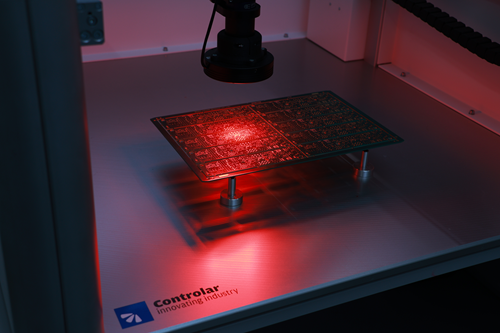
Controlar is bringing a new level of precision and control to electronics testing with the launch of PicAI (AI-Driven Probe Inspection Control), a fully automated system designed to replace manual ICT fixture verification in high-reliability environments.
In EMS manufacturing, even small inconsistencies in test setup can lead to costly escapes. Despite this, probe inspection remains one of the last largely manual steps in the test process—often taking hours and relying on operator interpretation. PicAI was developed to eliminate that gap.
The system combines high-resolution imaging, synchronized lighting, and adaptive AI to inspect probe marks across the entire PCB and verify contact accuracy at every test point. By analyzing the exact position and quality of each probe imprint, PicAI can detect subtle misalignment, insufficient contact, and early probe wear—issues that are difficult to catch consistently through manual inspection.
Turning Inspection into a Measurable Process
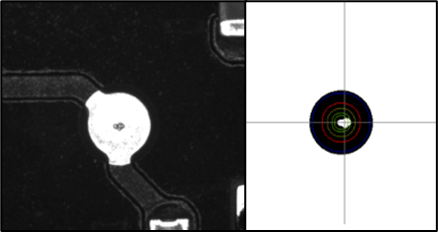
PicAI goes beyond simple pass/fail inspection. Using image-based analysis, the system measures probe mark position relative to the intended test point center, providing quantifiable data on alignment and contact quality. This transforms probe verification into a repeatable, data-driven process rather than a subjective visual check.
With ~7 µm per pixel resolution, PicAI captures fine detail across complex assemblies, including high-density and fine-pitch designs common in aerospace and defense electronics. The system supports both single-sided and simultaneous dual-sided inspection, ensuring full coverage without increasing inspection time.
Its AI-driven software automatically adapts to different PCB layouts, finishes, and colors, reducing false calls and minimizing setup time when switching between products.
Designed for Traceability and Process Control
For manufacturers operating in regulated environments, documentation and traceability are just as important as accuracy. PicAI generates detailed inspection reports for every board, including probe position data, deviation analysis, and visual records of each test point.
This level of traceability supports root cause analysis, preventive maintenance, and continuous process improvement—helping teams identify trends such as gradual probe wear or fixture degradation before they impact production.
From Hours to Minutes
Manual probe inspection can take several hours per fixture, particularly on complex boards. PicAI reduces that process to minutes, delivering fast, consistent results without operator variability.
By validating fixture integrity before test, the system acts as a critical quality gate—reducing false failures, minimizing rework, and improving overall test confidence. For aerospace and defense programs, where reliability is non-negotiable, this added level of assurance is especially valuable.
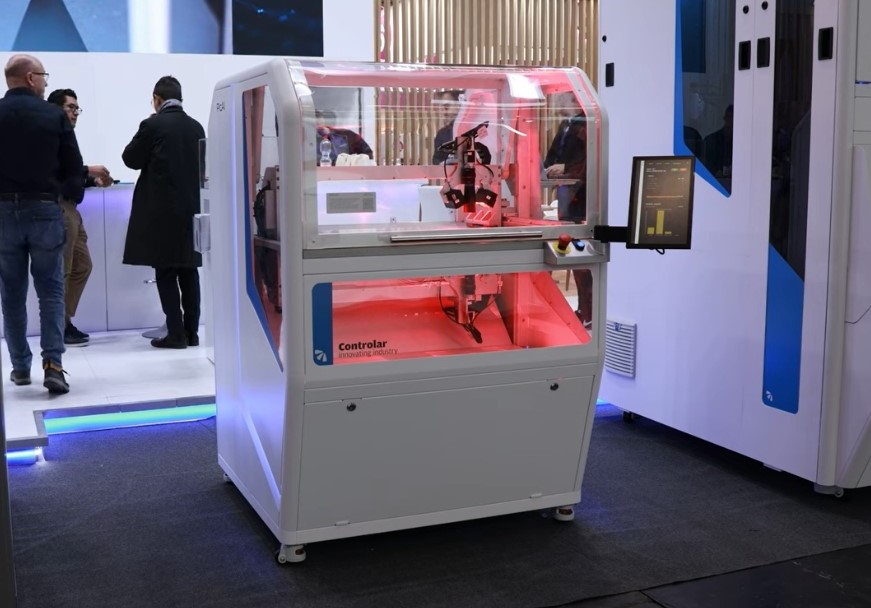
Flexible for Lab and Production Environments
PicAI is available in multiple configurations to match different use cases:
- A fully automated system designed for production environments and in-line integration
- A compact benchtop version for R&D, validation, and low-volume applications
- A service model, where Controlar performs inspection and fixture verification for customers
This flexibility allows manufacturers to apply the same inspection methodology across development, validation, and full-scale production.
Supporting Mission-Critical Electronics
As electronics continue to increase in complexity, such as in aerospace and defense applications, ensuring the reliability of every test step is essential. PicAI brings consistency, visibility, and control to probe inspection—closing a long-standing gap in the test process.
By replacing manual verification with automated, data-driven analysis, Controlar is helping manufacturers improve test accuracy, reduce risk, and maintain confidence in every build.
For more information about PicAI, visit https://controlar.com/en/picai/.