


Solar Energetic Particle Prediction – Fujitsu Limited [1] (Fujitsu), Nagoya University, Tokai National Higher Education and Research System [2] (Nagoya University), the Japan Agency for Marine-Earth Science and Technology [3] (JAMSTEC), and the National Institute of Information and Communications Technology [4] (NICT), together with their research partners in Japan and Portugal [5], today announced the development of the world’s first technology [6] that uses observational data from five spacecraft to objectively, reproducibly and automatically determine the parameters of physical simulations used to calculate the arrival of solar energetic particles (SEPs) [7], improving the simulations’ accuracy. SEPs can expose astronauts to radiation and cause satellite malfunctions. The results were published in the journal Scientific Reports [8].
Applying this technology to SEP arrival prediction is expected to help reduce satellite failures and promote the use of satellite data. By reducing radiation exposure risks, it can also help ensure astronaut safety and, in the future, contribute to the creation of new industries associated with lunar base activities.
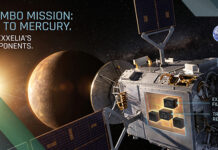
Because SEPs are electrically charged and scatter as they travel along magnetic field lines extending from the Sun, predicting their arrival is extremely difficult. Until now, experts have determined parameter values through experience and trial and error so that simulations could reproduce observations of past events. This approach, however, made it difficult to objectively justify the values and reproduce the results using the same procedure. The research group therefore automated parameter setting using black-box optimization [9]. Specifically, the group succeeded in automatically setting 19 parameters [10] for a physical simulation that calculates SEP intensities and arrival times, minimizing discrepancies between the simulation and observations made by five spacecraft, including BepiColombo, the Mercury exploration mission conducted as a joint European-Japanese project. At the core of the technology is the Fujitsu Solar Energetic particle Intelligent Tuning and Evaluation Network (SEITEN) [11], developed by Fujitsu. SEITEN links SUSANOO [12], a magnetohydrodynamic (MHD) simulation [13] developed by the Institute for Space-Earth Environmental Research at Nagoya University and operated by NICT, with SEPIF [14], a particle acceleration and transport model developed by JAMSTEC. Using black-box optimization, it automatically determines parameters related to particle acceleration and transport. Interplanetary scintillation (IPS) [12] observational data from Nagoya University’s Institute for Space-Earth Environmental Research were also used to select the MHD simulation settings.
Using observational data from multiple spacecraft, the research group automated the complex task of setting parameters representing factors such as the strength of particle scattering, while also enabling estimation of their spatial distribution [15]. This represents an important step toward the practical application of technology for accurately predicting SEP intensities and arrival times.

Figure 1: Comparison between conventional parameter determination and the new technology. This schematic views the Sun from above its north pole. The spiraling lines extending from the Sun represent magnetic field lines, and the symbols show the positions of the five spacecraft on October 10, 2021 (PSP: Parker Solar Probe; SolO: Solar Orbiter).

Figure 2: Overview of the technology. Two physical simulations are linked, and mathematical optimization automatically and repeatedly updates parameter values to reduce discrepancies between the calculations and observations from the five spacecraft.
Background
The sphere of human activity is expanding from Earth orbit to the lunar surface. Japan’s Basic Plan on Space Policy, approved by the Cabinet in June 2023, calls for the phased development of power, communications, positioning and other systems to support sustainable human activity on the Moon and aims to create new industries. International initiatives for human lunar activity, including the Artemis program in which Japan participates, are also progressing. At the same time, radiation arriving from the Sun, including SEPs, is one of the factors that threaten the safety of such space activities.
Solar flares and coronal mass ejections (CMEs) [16] can accelerate particles such as protons and electrons to speeds reaching several tens of percent of the speed of light and release them into interplanetary space. The resulting SEPs can cause equipment failures and malfunctions in satellites and pose radiation exposure risks to astronauts. As lunar activity becomes more extensive, it is therefore important to determine in advance when, where and how intensely SEPs will arrive. One promising way to predict their arrival is through simulations that calculate particle acceleration and transport based on physical laws. However, these simulations include many values, or free parameters, that cannot be measured directly from observations. Representative examples include injection efficiency, the fraction of particles ahead of a shock wave that enter the acceleration process, and mean free path, a measure of the distance particles travel along a magnetic field line before being scattered. Even slight changes in these values can alter predicted particle intensities by orders of magnitude.
The parameters must therefore be adjusted to match past observational data. Conventional adjustment methods, however, depend on experts’ experience and trial and error, making it difficult to objectively justify the values or reproduce them using the same procedure. In addition, the number of parameters has often been kept small enough to allow manual adjustment. As a result, values that are thought to differ by magnetic field line could not be determined for each field line from observational data. Attempting to determine separate values for each line increases the number of parameters. Simply testing 10 values for each of the 19 parameters addressed in this study would produce 10^19 combinations. Since manually searching for a combination that simultaneously matches observations from multiple distant locations is impractical, a mechanism was needed to search objectively and reproducibly based on observational data.
Future Plans
Fujitsu, Nagoya University, JAMSTEC and NICT will further advance this technology to realize more reliable prediction capabilities. By enabling earlier assessment of radiation exposure and satellite failure risks, the organizations aim to contribute to improved safety in lunar industries such as construction and transportation, as well as in sustainable human activities on the Moon.
For more information visit: https://global.fujitsu/.